The Past, Present & Future of Global Energy Production
|
Revolutionizing Renewable Energy Management: Past, Present & Future
Hitting our 2050 NetZero goals is not only about deploying more RE assets - it is also about being able to manage the energy effectively.
Introduction
The International Renewable Energy Agency (IRENA) estimates that global RE capacity needs to quadruple by 2050 ¹ for us to reach net-zero carbon emissions. We’d like to highlight that to reach this goal, we do not only need to produce far more renewable energy, we also need to make vital changes to the way our grids work and how energy is stored. Recent International Energy Agency (IEA) research has found that for us to reach our NetZero targets we need to add or refurbish a staggering 80 million km of grids by 2040 ² - that is about the same length of the entire existing global grid! It seems like an impossible task - and clearly, other methods and systems are needed to take up a significant part of the strain. To this end, smart storage is a game changer - and it can certainly mitigate some of the lack of resilience in our grids, but by itself, it is not enough.
In this article, we will explore how we have reached where we are today, where we are heading, and what changes to infrastructure are required for us to be able to handle the vast amount of Renewable Energy that is needed.
The past
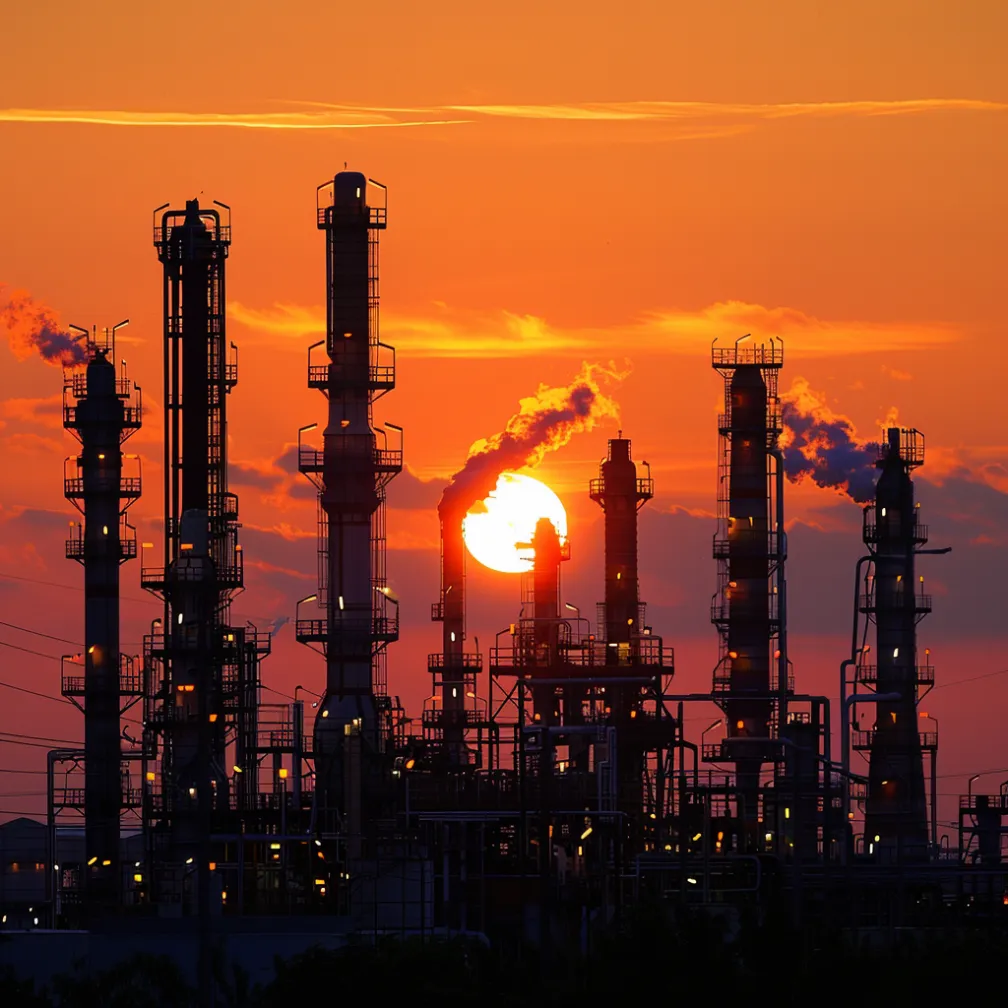
In the last hundred years, there have been significant technological advancements in the exploration, extraction, and refinement of fossil fuels, including enhanced oil recovery methods and a significant rise in the use of natural gas. However, when we compare the developments in the fossil fuel industry over the last century with the radical and astonishing transformation we’ve seen during the same period in the automobile, aeronautical, and telecom industries, the developments in energy production are meager by comparison. Fossil fuels still supply around 80 percent of the world’s energy, according to the Environmental and Energy Study Institute (EESI) . ³
The current transformation of the energy sector began as recently as 15 years ago, as people started to wake up to the climate crisis we are facing. Focus on renewable energy began to increase, leading to a rapid growth in solar and wind energy. Targets were set and governments and businesses began the race towards these goals, investing heavily in solar and wind projects. According to IRENA, between 2009 and 2019, global solar photovoltaic (PV) capacity increased from about 21 GW to over 584 GW, and global wind power capacity increased from around 159 GW to over 651 GW. ⁵
Navigating Grid Congestion and Storage Challenges
The present
It’s fair to say that we're still at the beginning of our energy revolution, as we slowly move from centralized fossil fuel-burning power plants, towards distributed renewable energy. Increasing numbers of independent power producers (IPPs) are providing energy to the grid, rather than just a few large players. The IEA estimates that IPPs could reach 48% of global electricity generation capacity by 2050, highlighting their potential dominance. ⁶ The problem is that this shift is already contributing to congestion in grids around the world. To accommodate the growth in IPPs, combined with our ever increasing demand for energy, grids need to become far more complex and intricate, and this in turn requires smart management on all levels.
Congestion
As a response to the overloading of transmission lines and other grid components, legislation in some parts of the world such as NEM 3.0 in California is being passed that insists that residential producers of solar energy also provide sufficient energy storage.
Storage helps reduce congestion, but by itself, it is not enough to solve the problem. A major issue that limits the potential storage to reduce congestion is that many RE assets on the industrial scale were developed with legacy systems and this means that as they are, they lack connectivity and are not suitable for the more dynamic needs of the market. If you would like to know more about this, check out our January newsletter about the importance of Dynamic Control:
The lack of visibility typical of older RE assets means that efficiency is affected as faults often go undetected and systems are not optimized. Many producers also operate multiple systems sold by multiple vendors which further complicates matters. This is partly why a shocking 70% of RE assets still don't reach their targets.
Transitioning Towards Energy Independence with enSights
The solution
What is needed to solve these problems is a robust software solution, such as enSights, which effectively manages and optimizes all RE assets and storage systems (including legacy systems) in distributed networks.
Future - Energy Independence
The shift towards renewable energy is growing at an increasing pace as we strive towards our Net Zero targets. According to Ember, we are already on the cusp of fossil fuel energy beginning to decline. ⁷
As we go forward, energy independence is likely to become the norm at all levels including residential, C&I markets, and at the national level. For this transformation to be successful, RE assets need to be managed properly. Energy must become data-driven from production through to end-use. This requires a renewable energy operating system, and this is exactly what enSights is.
Handling the data
Remember how phone networks used to be managed by people, and think how they have changed. Well, it's the same with the grid. In the near future, there will be massive amounts of data we've never seen before in energy grids- with billions of data points, and vast quantities of inputs and outputs. This data will need capturing and responding to in real-time.
Energy Production and the Move towards a Circular Economy
With distributed RE, a significant amount of energy will be used locally, requiring a corresponding growth in storage. This need for storage is further amplified by the rise of EVs and the corresponding growth in V2G - Vehicle to Growth. To achieve this transformation, a shift from supply-side to demand-side management is key. This is already happening, and it is only going to become more important.
The Holy Trinity
The holy trinity of energy production for the future will be production, storage, and consumption. These will be key to effectively managing microgrids, community solar and the virtual power plants of the future. Today enSights is already providing the solution for the existing needs of solar asset production, storage monitoring, optimization, and consumption behavior analysis.
From Micro Grids to Virtual Power Plants
We believe that we are going to see a shift from microgrids that focus on localized, self-sustaining energy systems and community solar to virtual power plants (VPPs) that aggregate and coordinate various distributed energy resources across a larger scale to provide grid services.
The goal of a VPP is to balance supply and demand, enhance grid stability, and facilitate participation in energy markets.
VPPs leverage advanced communication and control technologies to optimize the performance of distributed resources in real-time. This simply cannot be done without an advanced operating system for RE.
According to P&S Intelligence, in 2022, the VPP market was valued at $3.3 Billion (USD) and is forecast to grow exponentially to $12.2 Billion by 2030. ⁸
enSights
enSights is perfectly positioned to help RE asset owners become VPPs and benefit from additional revenue streams.
enSights is a SaaS platform that benefits all entities in the RE value chain. We connect all types of inputs and bring them together via one dynamic cloud-based solution that provides end-to-end connectivity to RE operations. Using our platform offers significant increases in accessibility, visibility, ease-of-use, and productivity as well as impressive reductions in operations costs.
Hundreds of thousands of RE systems can be added to enSights at the click of a button with our unique onboarding process.
Our end goal is to provide the standard software for the renewable energy market to manage the many emerging microgrids, community solar and virtual power plants.
Make your RE operations more controllable and reliable today. Start by booking a demo of enSights
Read more about the latest developments and challenges in Renewable Energy management & generation:
The growing issue of grid congestion is serious enough to stall growth in RE
Renewable energy producers feel the pinch as margins come under increasing pressure
How to radically upgrade Your RE production & management in a way that rapidly pays for itself
Sources:
https://www.irena.org/-/media/Files/IRENA/Agency/Publication/2018/Apr/IRENA_Report_GET_2018.pdf
https://ourworldindata.org/grapher/global-energy-consumption-source
https://www.iea.org/reports/renewables-2022/executive-summary
https://ember-climate.org/insights/research/half-of-the-world-has-passed-peak-fossil-power/
https://www.psmarketresearch.com/market-analysis/virtual-power-plant-market
How can renewable energy be effectively managed to meet 2050 Net Zero goals?
Reaching 2050 Net Zero targets requires more than deploying additional solar and storage assets, it demands smarter renewable energy management. As grids become increasingly distributed and congested, operators must coordinate energy production, storage, and consumption in real time. This includes integrating legacy assets, optimizing battery storage, reducing grid congestion, and enabling participation in virtual power plants (VPPs). Cloud-native, data-driven energy management platforms are essential to provide visibility, control, and optimization across distributed energy resources. Without advanced software to manage complexity at scale, renewable capacity cannot deliver the reliability, efficiency, and financial performance needed to achieve Net Zero.